|
Acupuncture relieves neck pain and numbness and reduces levels of proinflammatory blood cytokines. Researchers conclude that warm needle acupuncture has a 92.05% total effective rate for the treatment of pain, numbness, and radiating discomfort due to cervical spondylosis with radiculopathy. This is a condition wherein there is spinal and soft tissue degeneration in the neck causing nerve impingement with subsequent pain or numbness. Acupoints for cervical radiculopathy. The symptoms often radiate from the neck to the shoulders, chest, back, and limbs. In addition, acupuncture successfully reduces blood levels of tumor necrosis factor-a (TNF-a) and the proinflammatory cytokines interleukin-1 beta (IL1β) and interleukin 6 (IL6).
A total of 169 patients participated in the hospital study. Most of the patients experienced pain upon stretching and all patients had a limited range of motion of the neck. Patients demonstrated significant reductions in neck, shoulder, and limb pain as a result of acupuncture treatments. Acupuncture also significantly relieved numbness in these areas.
Two groups were compared. One group received conventional acupuncture and the other group received warm needle acupuncture. The warm needle acupuncture group received a combination of moxibustion with acupuncture and had a 92.05% total effective rate. The conventional acupuncture group had an 81.48% total effective rate.
One course of care comprised one treatment per day for six days. All patients received two courses of care. Both groups demonstrated a high effective rate with significant reductions in pain and numbness. In addition, both groups demonstrated significant improvements in range of motion. Needling of the neck.
A related study finds acupuncture more effective than Meloxicam, a nonsteroidal antiinflammatory drug, for the treatment of neck disc herniations. A total of 420 patients were investigated in a randomized controlled study.
Of the 207 electroacupuncture patients, 145 patients recovered in the short-term. Of the 208 drug patients, 93 recovered in the short-term. Improvements also occurred in an additional 53 acupuncture patients and 90 medication patients. The electroacupuncture group had 9 poor responses and the drug group had 25 poor responses to treatment in the short-term.
Poor results for electroacupuncture were limited to 2 patients and 14 medication patients had poor results in the long-term. The researchers note, “With a randomized controlled multi-centered large-sampled method, this study has shown that the EA (electroacupuncture) group was better than the medication group in comparing both short-term and long-term therapeutic efficacies.”
If you or someone you know suffers from neck pain or numbness, please contact us!
Chronic pain is a growing and complicated issue. Millions of people feel stuck with their pain, suffering day in and day out with no resolution in sight. For many, acupuncture can shed light at the end of this very dark tunnel.
We know that the nature of chronic pain can vary widely, from musculoskeletal and neurogenic to gastrointestinal, urogenital, and gynecological. However, less attention gets paid to the emotional component of chronic pain, which can be caused and exacerbated by negative emotions such as anger, frustration, and anxiety.
Pain conditions that are emotionally charged—which, ultimately, describes all cases of pain, since being in pain produces negative thought patterns—often are unabated by the pain killers and anti-inflammatory medications that are so commonly prescribed.
Treating chronic pain effectively requires approaching it holistically. This is where acupuncture excels.
Acupuncture Approach to Chronic Pain
In Chinese medicine, there is no separation between mind and body. The two are inexorably linked, constantly influencing and regulating each other.
This philosophy runs counter to the way chronic pain is typically tackled by mainstream medicine, which tends to approach the problem strictly through a biological lens. Biologically, chronic pain is fairly straightforward. Misbehaving nerve impulses fire consistently, alerting the brain to the presence of inflammation or tissue damage.
When we look at chronic pain holistically, there’s more than nerve impulses to consider.
Our thoughts have a profound effect on how our bodies function. Negative thoughts and emotions increase stress hormones such as cortisol and norepinephrine, which overtime can lead to systemic inflammation and a deterioration of overall health.
Emotions, like physical activity, require the expenditure of energy—energy that could otherwise be directed toward helping to heal the body. This is why you can have days when you barely exert yourself physically yet feel exhausted by the end.
Our emotions can wear us out. Many people are overwhelmed with stress, anxiety, and other types of emotional turbulence yet remain unaware that it’s contributing to their physical health problems.
Acupuncture refuses to let emotional turbulence fly under the radar.
In acupuncture theory, the Heart is at the center of all human life and plays a role in all emotions. Appropriately, another term for the Heart in Chinese medicine is Emperor. If the Emperor falls ill, he loses his ability to maintain order in his empire.
When we apply that metaphor to human health, it goes something like this: The Heart, ruler of the emotions, must be healthy for the rest of the body to follow suit. In other words, it is impossible to effectively treat chronic pain (or any other chronic condition) without addressing a person’s state of mind.
So, how do acupuncture and Chinese medicine address our states of mind?
One way is by choosing acupuncture points and prescribing herbal formulas that boost or tonify Blood. In acupuncture, negative emotions, particularly when chronic, create internal heat, which eventually consumes and depletes the nutritive Blood of the body.
Blood in acupuncture is more than just the red liquid that flows through our veins and arteries. Blood is viewed as a substance of nutrition and healing, the conduit through which our emotions flow.
When negative emotions become consuming, as is often the case in people who live with chronic pain, it can lead to signs of what acupuncturists call Blood deficiency. Symptoms may include dizziness, heart palpitations, insomnia, fatigue, poor memory, pale skin and tongue, weak pulse, and scanty or light menstrual periods.
Read "Self-Care Techniques for Chronic Pain" in our next post!
- Written by Adam Cantor
A new study concludes that acupuncture combined with herbal medicine is more effective than drugs for the treatment of headaches. This confirms similar results found in a prior study wherein acupuncture was found comparable to drugs for the treatment of migraine headaches. The new study finds acupuncture combined with herbal medicine is effective for the treatment of vascular headaches whereas the prior study found acupuncture, as a standalone procedure, effective for the treatment of migraines. The results agree that acupuncture and/or acupuncture combined with herbs produce positive patient outcomes for headaches.
 The prior study concluded that acupuncture is “of comparable efficiency to several proven drug therapies for the treatment and prevention of migraine(s).” The meta-analysis examined 25 randomized controlled trials involving a sample size of 3,004 patients. True acupuncture significantly outperformed simulated sham-acupuncture. In addition, true acupuncture was comparable to drug therapy for the treatment and prevention of migraines.
Acupuncture combined with Chinese herbal medicine is more effective than nimodipine for relieving vascular headaches. These headaches include cluster headaches, migraines and toxic headaches. Migraines involve unilateral or bilateral head pain and may combine with nausea, vomiting, sensitivity to light and sound, and visual auras. Toxic headaches occur during fevers. Cluster headaches are focal and recur in severe episodes.
The researchers conducted a randomized acupuncture continuing education investigation of 92 patients with vascular headaches at the College of Traditional Chinese Medicine (TCM) in Chongqing Medical University (Sichuan). Group #1 received oral administration of nimodipine at 40 mg per dose, three times per day. Group #2 received acupuncture and a Chinese herbal formula. A course of treatment for both groups consisted of two weeks and the entire treatment lasted for two courses.
After two courses of treatment, both groups achieved varied degrees of curative effects in terms of reducing headache attacks, duration of each attack and the intensity degree of headaches. The acupuncture group outperformed the drug group in all of the aforementioned indices. As a result, the researchers conclude that acupuncture combined with Huo Xue Qu Feng Tong Luo Tang is superior to nimodipine for the treatment of vascular headaches.
Acupuncture is found more effective than drug therapy for the treatment of neck disc herniations. We encourage you to review the study highlighted below. Whether you are an acupuncture 'pro' or are curious about finding long term pain relief, call our clinic for a phone consult and to schedule a session today!
This disorder is characterized by neck pain, numbness and/or weakness that often radiates towards the hands. Researchers compared electroacupuncture with the medication Meloxicam and discovered that electroacupuncture is more effective in both the short and long-term for the treatment of cervical intervertebral disc herniations.
A total of 420 patients were investigated in this randomized controlled study. An electroacupuncture group was compared with a Meloxicam group. Meloxicam is a nonsteroidal anti-inflammatory drug (NSAID) with analgesic and anti-febrile effects.
Acupuncture was applied to acupoints GV14 (DU14, Dazhui), UB11 (BL11, Dazhu) and SI3 (Houxi). All participants were screened with strict inclusion and exclusion criteria based on objective testing including standard X-ray findings and CT (computed tomography) scans.
GV14 was needled upwards and obliquely between 0.5 to 0.7 cun. A cun is an anatomical measurement that is approximately 1 inch. SI3 was needled perpendicularly towards LI4 (Hegu) between 0.5 to 0.7 cun. Upon the arrival of de Qi needling sensation, a manual acupuncture technique of lifting and thrusting was applied with mild intensity for one minute for each of these acupuncture points. De qi is a combination of bodily sensations induced by acupuncture needling techniques combined with physiological responses to the stimulation. De qi sensation is often described as dull, heavy, deep pressure, pulling, numb, aching, spreading, radiating, electrical, refreshing, relieving and tingling. The requirements for the de Qi sensation at SI3 were that of extending to the entire hand.
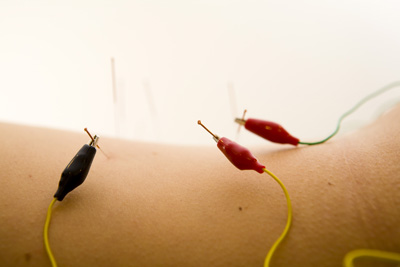
GV14 and UB11 were connected by electroacupuncture stimulation with a continuous wave at 40 Hz with an intensity of 2 mA for approximately 20 minutes. Acupuncture treatments were administered once per day. A total of 10 acupuncture treatments consisted of one treatment course. A day off was taken following the first course. This was followed by another treatment course of identical procedures and quantity. The Meloxicam medication group received a 7.5 mg/tablet at a rate of once per day. The oral tablet was taken after dinner for a total of 20 days.
Of the 207 electroacupuncture patients, a total of 145 patients recovered in the short-term. Of the 208 medication patients, 93 recovered in the short-term. Improvements also occurred in an additional 53 acupuncture patients and 90 medication patients. A poor response was indicated by no improvement of symptoms and the decrease rate of symptoms and signs was less than or equal to 30%. The electroacupuncture group had 9 poor responses and the medication group had 25 poor responses to treatment.

Long-term results were significantly better for the electroacupuncture group than the medication group. Of the 207 electroacupuncture patients, a total of 180 patients showed recovery in the long-term. Of the 208 medication patients, 142 patients had a long-term recovery. Electroacupuncture caused 25 patients to improve significantly. The medication caused 52 medication patients to improve significantly. Poor results for electroacupuncture were limited to 2 patients and 14 medication patients had poor results. The researchers note, “With a randomized controlled multi-centered large-sampled method, this study has shown that the EA (electroacupuncture) group was better than the medication group in comparing both short-term and long-term therapeutic efficacies.”
Recovery was defined as a patient who is asymptomatic, has regained normal muscle strength and cervical & limb functions, is able to return to work and has a decrease in the rate of both symptoms and signs greater than or equal to 95%. Objective improvements were measured with tests including tendon reflexes, brachial plexus traction tests and spurling tests. Cervical motion was rated for improvements in lateral flexion, forward flexion, backward bending and side turning. Subjective measurements were applied to pain, tenderness and numbness scores. These measurements demonstrated that electroacupuncture proved significantly more effective in the short and long-term than the medication.
Short-Term Results
Of the 207 electroacupuncture patients, a total of 145 patients recovered in the short-term. Of the 208 medication patients, 93 recovered in the short-term. Improvements also occurred in an additional 53 acupuncture patients and 90 medication patients. A poor response was indicated by no improvement of symptoms and the decrease rate of symptoms and signs was less than or equal to 30%. The electroacupuncture group had 9 poor responses and the medication group had 25 poor responses to treatment.
Long-Term Results
Long-term results were significantly better for the electroacupuncture group than the medication group. Of the 207 electroacupuncture patients, a total of 180 patients showed recovery in the long-term. Of the 208 medication patients, 142 patients had a long-term recovery. Electroacupuncture caused 25 patients to improve significantly. The medication caused 52 medication patients to improve significantly. Poor results for electroacupuncture were limited to 2 patients and 14 medication patients had poor results. The researchers note, “With a randomized controlled multi-centered large-sampled method, this study has shown that the EA (electroacupuncture) group was better than the medication group in comparing both short-term and long-term therapeutic efficacies.”
 Hello! My name is Virginia Dreier and I am a licensed massage therapist at Health on Point. I graduated from East-West School of Integrated Healing Arts this past summer in North Liberty specializing in Swedish and blended Swedish-Shiatsu style massage. Although I grew up in Iowa City, I left for 6 years during which I attended Oberlin College and travelled as an outdoor educator. As a teacher I learned many lessons: about compassion, empathy, patience, and care. I still work as a teacher at Willowwind School in the Montessori preschool-continuing to learn these lessons.
I chose massage therapy because I wanted to live a life of balance and peace. I wanted to be healthy and less worried. I wanted to improve my quality of life. I feel very grateful to walk a new path as a healer. I offer to each client the same desires for optimal health and well-being.
Massage therapy, the practice of using touch to heal, is an ancient healing art and is found throughout the world in many different forms. Swedish massage refers to the use of oil or lotion on the skin to provide smooth strokes, compression, and percussion focused on muscle relaxation and circulation. Swedish massage is perhaps the most commonly known form of massage in the US because of its use at spas for gentle relaxation. Shiatsu originates from Japan and uses the meridian energy system (used in Traditional Chinese Medicine and acupuncture) to guide and focus treatments. It is performed using point pressure on certain parts of the body on top of the clothes and also involves passive stretches. Traditionally performed on the floor, I use a blended style that uses the massage table instead, appropriate Swedish strokes, and promotes balance of the energy meridians. It is a very relaxing experience.
Massage can strengthen your immune system, lower blood pressure, reduce headaches, and improve your mood. Massage is finally being studied, accepted and promoted by health officials and is now commonly used as complementary and alternative medicine. It is increasingly being offered along with treatment for a wide array of medical problems such as anxiety, insomnia related to stress, migraines, sports injuries and of course muscular ‘knots’.
Massage is not simply a source of relaxation it is a powerful tool for treating dis-ease and promoting a life of healing and health. My clients choose me because I have a deeply caring, intuitive touch and confident presence that builds trust; allowing them to relax and start healing themselves immediately. Please check out my Facebook page for more information about me and my practice, Renew Massage, or if you have any questions at all please email me. I am very grateful for and look forward to becoming a part of the Health on Point community and working towards healing for us all.
The countdown is on for Migraine Awareness Week. My patients (and friends!) will concede that one of my favorite parts of my practice is providing acupuncture for migraine sufferers. The techniques available to individuals when they come to our clinic are unique in our community. Many find immediate and profound relief from acupuncture, for others it may take a few sessions. Regardless, however, I believe that resolution IS possible. Offering education and guidance for at home care is always part of the regimen. Below are some of the key points. Read on and let us know - what is your experience with migraines and acupuncture relief? Have you discovered any techniques you can use on yourself that provide immediate relief?
 |
| Try massage at the red points above! |
Pressure
Many people find that applying gentle pressure to the head, face, and neck during a migraine can help ease the pain. Techniques to try:
- Press the brow line and under the eyes.
- Rub the temples and jaw in a circular motion.
- Massage the base of the skull with a tennis ball.
Diet Changes
Some people find that certain foods trigger their migraines. Common trigger foods include alcohol, caffeine, chocolate, canned foods, cured or processed meats, aged cheeses, cultured dairy, MSG, and aspartame. Keeping track of what you eat with a food diary can help you identify what you ate before a migraine came on. Try eliminating these foods one at a time to see if it improves your migraines.
Good Habits Fight Migraines
Your lifestyle can have a big impact on how often you get migraines. These tips can help:
- Keep a migraine diary to track your triggers.
- Don't skip meals.
- Stay hydrated.
- Get regular exercise.
- Maintain a healthy weight.
Migraines affect up to 12% of the US population (36 million people). Around two thirds of sufferers are women. The first week of September is Migraine Awareness week. We at Health On Point would like to offer special sessions, additional education and support for those in the community who suffer with migraine headaches.
This week we will start with a personal story. Jane Elliott is a health reporter at BBC News. Below is an excerpt in which she discusses living with this condition and how acupuncture is offering a respite.
Even as a tiny baby, I am told, I used to hold my head, go pale, and vomit. As I grew older the migraines started to follow a more defined pattern.
It seemed that anything that I liked and enjoyed could prove a trigger: chocolate, too much orange juice, Coca cola, excitement over parties or school trips.
In the end my parents would not tell me about a planned treat until minutes before we left in the hope I would keep calm and avoid 'getting worked up'.
I can remember a sudden attack on the way home from school, aged about 10, left me in agony, being sick on the roadside and wondering how I was going to manage the short distance home.
Triggers
And as I got older, I quickly learnt that even a small glass of red wine always has disastrous results, although I can drink small amounts of white wine with no ill effect.
Exhaustion is another big trigger, and as a mother of two young children I have found the frequency of my attacks increasing over the last four years.
I know I can probably survive with one broken night's sleep, but any more than that will always mean a migraine.
In any given month I can have between one and six attacks, although during both pregnancies I was migraine free.
Some weeks are so bad that I get one horrendous attack and what I can only describe as aftershocks over the next few days.
Darkened room
In the worst attacks I am so debilitated that the pain, concentrated mainly on my left temple, seems unbearable and I have to retire to a darkened room.
First comes hours of excruciating pain and feelings of depressing nausea, then a welcome relief as I eventually vomit and as the pain recedes and I can fall into sleep.
My migraines last on average eight hours - some people suffer days of pain.
Over the years I have tried every sort of pain relief, from over-the-counter headache tablets - which only work sometimes in the very early stages - to targeted migraine drugs, which worked on many of the attacks but left me feeling nauseous.
This year, after my migraines reached an intolerable level and I found myself getting as many as three attacks a week, I decided to take immediate action.
My doctor recommended Imigran Recovery (sumatriptan), which has recently been made an over-the counter drug. He warned me that it didn't work for everyone - but it worked for me.
If I took the tablets everywhere with me and took them as soon as I started to feel the familiar warning signs they did not develop.
Not wanting to become reliant on too many drugs however, I decided to explore other ways of alleviating my migraine.
My mother recommended acupuncture, and I must admit that I was at first sceptical.
She had seen a TV programme which seemed to show a link between acupuncture and migraine relief, and she offered to pay for a course of treatments for me to see if it worked.
I didn't hold out much hope of it working, but was prepared to give it a go.
Diet changes
As well as the acupuncture, I was told to make some changes to my diet - only two cups of tea a day and no diet Coke (I normally have at least six teas daily and about one or two diet cokes a week).
Christina, my acupuncturist, warned that I was using the caffeine to boost my energy levels and advised more water instead. Cutting out the caffeine from my diet was extremely hard and I had more than a few withdrawal symptoms, although in the long-term a relatively caffeine free diet is no bad thing for my overall health.
Sessions took an hour and consisted of gentle head massage as well as the strategically placed acupuncture needles.
The first week I had two attacks, the next week I had one and I was beginning to worry that I might be one of those for whom acupuncture did not work.
But at the start of week three I had a revelation - no migraines.
I went for treatment once a week for about two months and was completely migraine free. Apart from pregnancy this was a first.
Over three months later I have had one bad migraine (last week) which I put down to an enforced break of six weeks, while the acupuncturist and I both had three week holidays.
But I am amazed it has worked. I have read reports which say acupuncture and sham acupuncture both work, although other reports have disputed that. To be honest I don't care whether it is real, or as some say an effect 'in my mind'. I can't explain why it worked for me. All I can say is that it has worked for me and I intend to keep going.
As many of our patients know, when acupuncture is researched in this country, some authors question the efficacy of this medicine (this is an entirely different conversation - about the appropriateness of 'sham' acupuncture and other methods that may be utilized at the control, but more on that at another time). These same patients will most likely tell you that in their experience, acupuncture DOES work, no question. Of course in order for our broader community to even be willing to try acupuncture, and for physicians to feel comfortable suggesting or supporting this approach, support through rigorous research is invaluable. Last week the NYTimes had a wonderful article about the benefits of acupuncture and pain relief. And here it is...
A new study of acupuncture — the most rigorous and detailed analysis of the treatment to date — found that it can ease migraines and arthritis and other forms of chronic pain.
The findings provide strong scientific support for an age-old therapy used by an estimated three million Americans each year. Though acupuncture has been studied for decades, the body of medical research on it has been mixed and mired to some extent by small and poor-quality studies. Financed by the National Institutes of Health and carried out over about half a decade, the new research was a detailed analysis of earlier research that involved data on nearly 18,000 patients.
The researchers, who published their results in Archives of Internal Medicine, found that acupuncture outperformed sham treatments and standard care when used by people suffering from osteoarthritis, migraines and chronic back, neck and shoulder pain.
“This has been a controversial subject for a long time,” said Dr. Andrew J. Vickers, attending research methodologist at Memorial Sloan-Kettering Cancer Center in New York and the lead author of the study. “But when you try to answer the question the right way, as we did, you get very clear answers.
“We think there’s firm evidence supporting acupuncture for the treatment of chronic pain.”
Acupuncture, which involves inserting needles at various places on the body to stimulate so-called acupoints, is among the most widely practiced forms of alternative medicine in the country and is offered by many hospitals. Most commonly the treatment is sought by adults looking for relief from chronic pain, though it is also used with growing frequency in children. According to government estimates, about 150,000 children in the United States underwent acupuncture in 2007.
But for all its popularity, questions about its efficacy have long been commonplace. Are those who swear by it experiencing true relief or the psychological balm of the placebo effect?
Dr. Vickers and a team of scientists from around the world — England, Germany, Sweden and elsewhere — sought an answer by pooling years of data. Rather than averaging the results or conclusions from years of previous studies, a common but less rigorous form of meta-analysis, Dr. Vickers and his colleagues first selected 29 randomized studies of acupuncture that they determined to be of high quality. Then they contacted the authors to obtain their raw data, which they scrutinized and pooled for further analysis. This helped them correct for statistical and methodological problems with the previous studies, allowing them to reach more precise and reliable conclusions about whether acupuncture actually works.
All told, the painstaking process took the team about six years. “Replicating pretty much every single number reported in dozens of papers is no quick or easy task,” Dr. Vickers said.
The meta-analysis included studies that compared acupuncture with usual care, like over-the-counter pain relievers and other standard medicines. It also included studies that used sham acupuncture treatments, in which needles were inserted only superficially, for example, or in which patients in control groups were treated with needles that covertly retracted into handles.
Ultimately, Dr. Vickers and his colleagues found that at the end of treatment, about half of the patients treated with true acupuncture reported improvements, compared with about 30 percent of patients who did not undergo it.
“There were 30 or 40 people from all over the world involved in this research, and as a whole the sense was that this was a clinically important effect size,” Dr. Vickers said. That is especially the case, he added, given that acupuncture “is relatively noninvasive and relatively safe.”
Dr. Vickers said the results of the study suggest that people undergoing the treatment are getting more than just a psychological boost. “They’re not just getting some placebo effect,” he said. “It’s not some sort of strange healing ritual.”
In an accompanying editorial, Dr. Andrew L. Avins, a research scientist at Kaiser Permanente who focuses on musculoskeletal pain and preventive medicine, wrote that the relationship between conventional medical care “and the world of complementary and alternative medicine remains ambiguous.” But at least in the case of acupuncture, he wrote, the new study provides “robust evidence” that it provides “modest benefits over usual care for patients with diverse sources of chronic pain.”
How has acupuncture worked for you? Join our discussion via Facebook or online testimonials!
"Summer Heat" is considered a pernicious influence typically occurring in the heat and humidity of summer. It is "uprising and spread out," affecting the head, causing thirst, a red face, and headaches. When summer heat combines with dampness due to humidity and over consumption of sugary drinks, such as soft drinks, this leads to a loss of appetite, nausea, vomiting, diarrhea, and fatigue. I've also been seeing patients complaining of more acne in recent weeks. There are particular acupuncture points that are used to clear excess heat from the body. You may call or email us anytime to schedule an appointment. With the farmers' markets in full swing with wonderful local produce and meats, I like to encourage my patients to eat particular foods to cool their bodies. Watermelon, tomatoes, eggplants, summer squash and sweet corn all reduce heat signs. Cucumbers are another wonderful option and I've recently discovered a refreshing, cooling summer drink. Try it at home and let us know what you think:  Cooling Cucumber Limeade (concentrated) Cooling Cucumber Limeade (concentrated)
3 large cucumbers 6 limes (or more to taste) Syrup (or less to taste) 2 cups water 1 1/2 cups sugar sprigs of peppermint (also cooling!) Step 1: Bring the sugar, water and mint to boil in a small saucepan. Once the sugar is dissolved and the syrup is clear, set aside to cool. Step 2: Using a juicer*, juice the limes and cucumbers. I used the zest of two limes for a stronger flavor. Combine the cucumber-lime juice, water, and some simple syrup in a large pitcher (I used a mason jar) and chill. Pour over ice and add water or seltzer to taste. Enjoy!
* If you don't have a juicer, a blender will do, just add a bit of water, peel cucumbers and strain after blending to remove seedsPhoto courtesy of (and recipe inspired by) blog Nyam | adventures of cooking and eating...
It turns out even my 85 year-old grandmother is proud of the work I do. Last month, along with clipped coupons she send me this article from The Wall Street Journal.  High-Tech Tools Show How Acupuncture Works in Treating Arthritis, Back Pain, Other Ills High-Tech Tools Show How Acupuncture Works in Treating Arthritis, Back Pain, Other IllsThis spring the Wall Street Journal ran an excellent article headlining their Health & Wellness section. The articles author, Melinda Beck, reviews the medical science behind acupuncture therapy. For example, as is demonstrated in the image to the left: "A specialized MRI scan shows the effects of acupuncture. The top two images show the brain of a healthy subject. In the middle two images, a patient with carpal tunnel syndrome registers pain (indicated by red and yellow). The bottom images show the calming effect (indicated by blue) in the brain after acupuncture."
Does It Work? While scientists say further research is essential, some studies have provided evidence of acupuncture's effects. - Arthritis of the Knee: Acupuncture significantly reduced pain and restored function, according to a 2004 government study.
- Headaches: Two 2009 reviews found that acupuncture cut both tension and migraine headaches.
- Lower Back Pain: Acupuncture eased it in a big study last year, but so did a sham treatment where needles didn't penetrate the skin.
- Cancer: Has proven effective in reducing nausea and fatigue caused by chemotherapy.
- Infertility: Improves the odds of pregnancy for women undergoing in-vitro fertilization, according to a 2008 review of seven clinical trials.
- Addiction: Often used to help quit smoking, drinking, drug use and overeating, but there is no conclusive evidence that it works.
Not only does the article discuss common physical ailments, but the more allusive as well. A wonderful interactive tool reveals the common points on the ear that correspond to body conditions. If you'd like to use it, try it out here. You may download the full text article from our resources page here.
|
|
|
|