|
Below is a continuation from our last blog post "Your Pain is in Your Head".
In addition to the use of acupuncture needles and herbs to address deficient Blood, an acupuncturist treating chronic-pain symptoms may suggest some simple self-care techniques.
Mindfulness, for example, teaches people to be inquisitive rather than judgmental about their ailments. It teaches us to approach our issues with an open mind and to let go of expectations. Cultivating greater self-awareness helps to bring balance to the body and mind. It also makes it easier to determine when medical intervention is necessary or when it may be okay to wait for the discomfort to pass.
Chronic pain sufferers often feel as though they are constantly in pain. But by using mindfulness to bring increased awareness to their symptoms, many realize that their pain actually has ups and downs, and sometimes disappears completely.
Mindfulness is just one self-care technique that can be helpful in addressing the physical and emotional components of chronic pain. Your acupuncturist may also recommend pressure points that you can massage on yourself, self-administered moxibustion, movement therapies such as qigong, and changes to your diet. Ask your practitioner about steps you can take at home to support your acupuncture treatments.
If you suffer from chronic pain, pain medications may not be the only answer. Whether it’s an acupuncturist, naturopath, or Western medical doctor, find a clinician who is open minded and understands the importance of treating your body and mind as one. It may be just the change you’ve been hoping for.
Chronic pain is a growing and complicated issue. Millions of people feel stuck with their pain, suffering day in and day out with no resolution in sight. For many, acupuncture can shed light at the end of this very dark tunnel.
We know that the nature of chronic pain can vary widely, from musculoskeletal and neurogenic to gastrointestinal, urogenital, and gynecological. However, less attention gets paid to the emotional component of chronic pain, which can be caused and exacerbated by negative emotions such as anger, frustration, and anxiety.
Pain conditions that are emotionally charged—which, ultimately, describes all cases of pain, since being in pain produces negative thought patterns—often are unabated by the pain killers and anti-inflammatory medications that are so commonly prescribed.
Treating chronic pain effectively requires approaching it holistically. This is where acupuncture excels.
Acupuncture Approach to Chronic Pain
In Chinese medicine, there is no separation between mind and body. The two are inexorably linked, constantly influencing and regulating each other.
This philosophy runs counter to the way chronic pain is typically tackled by mainstream medicine, which tends to approach the problem strictly through a biological lens. Biologically, chronic pain is fairly straightforward. Misbehaving nerve impulses fire consistently, alerting the brain to the presence of inflammation or tissue damage.
When we look at chronic pain holistically, there’s more than nerve impulses to consider.
Our thoughts have a profound effect on how our bodies function. Negative thoughts and emotions increase stress hormones such as cortisol and norepinephrine, which overtime can lead to systemic inflammation and a deterioration of overall health.
Emotions, like physical activity, require the expenditure of energy—energy that could otherwise be directed toward helping to heal the body. This is why you can have days when you barely exert yourself physically yet feel exhausted by the end.
Our emotions can wear us out. Many people are overwhelmed with stress, anxiety, and other types of emotional turbulence yet remain unaware that it’s contributing to their physical health problems.
Acupuncture refuses to let emotional turbulence fly under the radar.
In acupuncture theory, the Heart is at the center of all human life and plays a role in all emotions. Appropriately, another term for the Heart in Chinese medicine is Emperor. If the Emperor falls ill, he loses his ability to maintain order in his empire.
When we apply that metaphor to human health, it goes something like this: The Heart, ruler of the emotions, must be healthy for the rest of the body to follow suit. In other words, it is impossible to effectively treat chronic pain (or any other chronic condition) without addressing a person’s state of mind.
So, how do acupuncture and Chinese medicine address our states of mind?
One way is by choosing acupuncture points and prescribing herbal formulas that boost or tonify Blood. In acupuncture, negative emotions, particularly when chronic, create internal heat, which eventually consumes and depletes the nutritive Blood of the body.
Blood in acupuncture is more than just the red liquid that flows through our veins and arteries. Blood is viewed as a substance of nutrition and healing, the conduit through which our emotions flow.
When negative emotions become consuming, as is often the case in people who live with chronic pain, it can lead to signs of what acupuncturists call Blood deficiency. Symptoms may include dizziness, heart palpitations, insomnia, fatigue, poor memory, pale skin and tongue, weak pulse, and scanty or light menstrual periods.
Read "Self-Care Techniques for Chronic Pain" in our next post!
- Written by Adam Cantor
Last week we announced our first joint event with Hearland Yoga! On the evening of March 26th, join us (1/2 block west) for an incredible hands-on event. You will receive auricular acupuncture in conjunction with guided breathing and relaxing yoga poses to enhance your sleep. Let us help you feel settled both physically and emotionally. We at Health On Point are preparing care packages for each individual attending. You may register by phone or directly online. Information is found in the poster below!
Acupuncture decreases the risk of stroke for patients with a traumatic brain injury (TBI). Stimulation of acupoints has been proven to reduce stroke risk and post-stroke depression. An investigation of 29,636 patients with TBI reveals that patients receiving acupuncture have a “lower probability of stroke than those without acupuncture treatment during the follow-up period.” Patients from 2000-2008 were reviewed from the Taiwan National Health Insurance Research Database. Follow-ups continued through the end of 2010. The study “showed significantly decreased risk of new-onset stroke events for patients with TBI who received acupuncture treatment. The present study is the first to report that acupuncture treatment was associated with reduced stroke risk for patients with TBI.”
The researchers note that acupuncture provides other medical benefits to patients with TBI. They noted, “Our previous study found that patients with TBI who received acupuncture treatment had less emergency care and hospitalization in the first year after injury compared with control.” Another study cited in the research “ proved that acupuncture improves cognition and perception of sleep or sleep quality.”
The researchers uncovered numerous studies demonstrating that acupuncture is effective “in improving stroke patients’ physical abilities.” They also found concrete evidence showing that acupuncture helps to lower blood pressure, reduce inflammation and improve the “lipid profile.” They note that this type of research helps to explain why acupuncture is effective in reducing the risk of stroke in TBI patients.
The study is important in that the sample size is large and that strict study designs were used. Additionally, the researchers sorted for socio-demographics and preexisting medical conditions to ensure accurate results. As a result, the researchers give a 95% rating of confidence to the study’s outcome.
The breakdown shows some interesting results. Overall, incidence rates for strokes in TBI patients decreased from 7.5 per 1,000 patients in the non-acupuncture group to 4.9 in the acupuncture group. Sorted by gender, females without acupuncture had an incidence of 6.5 per 1,000 but with acupuncture had an incidence of 4.6. For males, the incidence was 7.9 per 1,000 for non-acupuncture patients and 5.2 for acupuncture patients. For TBI patients from ages 20-44, the incidence was 2.1 for non-acupuncture patients and 1.2 for acupuncture patients. For ages 45-64, the incidence was 10.6 for non-acupuncture patients and 7.4 for acupuncture patients. For TBI patients 65 and older, the incidence was 28.4 per 1,000 for non-acupuncture patients and 18.0 for acupuncture patients.
In other recent related research, investigators discovered that combining acupuncture with conventional medications decreases post-stroke depression (PSD). Researchers examined 150 patients in a controlled single blind study. They concluded that acupuncture combined with medications synergistically improves patient outcomes by decreasing post-stroke syndrome, improving limb function and benefitting serum biochemistry. The study group receiving both acupuncture and medications had significantly better patient outcomes than the medication only and acupuncture only groups. This research supports the integration of acupuncture into conventional medical settings for patients who have suffered a stroke.
If you or a loved one have suffered a stroke, consider trying acupuncture at Health On Point. Appointments are available throughout the day to suit your needs!
Many feel immediate stress release from acupuncture.
When it comes to calming down, more and more people are turning to acupuncture for stress relief.
Jamie Starkey, an acupuncturist at Cleveland Clinic, said acupuncture for stress has a two-fold effect.
"So, as we’re treating patients, patients are not only engaged in that relaxation response, but also the brain begins to release endorphins and the endorphin response gives you that euphoric-like sensation," said Starkey.
Starkey said, when it comes to stress, most people feel an immediate response to acupuncture.
Some studies have found acupuncture lowers stress hormones, while others report a release of endorphins triggered by the technique.
Acupuncture works well as part of a multi-disciplinary approach to managing stress. If you would like to try acupuncture for stress relief, call to schedule a session. We also introduce patients to herbs and essential oils to support change at home.
The holiday season may be filled with a dizzying array of demands, visitors, travel and frantic shopping trips. For many people, it is also a time filled with sadness, self-reflection, loneliness and anxiety. Compound the usual seasonal pressures with economic strain and you may find this to be one of the most emotionally trying times of the year.
At some point in life everyone deals with major upheavals or emotional distress. These events can trigger a host of unexpected feelings and behaviors, from depression and panic attacks to major disruptions in sleep and eating. Acupuncture and Oriental medicine can alleviate symptoms associated with mental and emotional health issues by treating the root cause of the problem to help restore balance to the body's internal environment.
Mental health disorders are medical conditions that can disrupt a person's thinking, feeling, mood, ability to cope with the daily demands of life or relate well to others. Affecting people of any age, race, religion, or income, mental health issues are more common than you might think. In fact, experts estimate that a significant number of people report symptoms that indicate sufficient qualifying criteria of a mental disorder.
Acupuncture & Oriental Medicine does not recognize any mental disorder as one particular syndrome. Instead, it aims to treat the specific symptoms that are unique to each individual using a variety of techniques including acupuncture, lifestyle/dietary recommendations and exercises to restore imbalances found in the body. Therefore, if 100 patients are treated with acupuncture and Oriental medicine for anxiety, each of those 100 people will receive a unique, customized treatment with different acupuncture points, and different lifestyle and diet recommendations.
Mental health issues are best managed when health professionals work together to meet the unique needs of each individual. Acupuncture is an excellent addition to any treatment plan as it is used to help the body restore balance, treating the root of the disorder, while also diminishing symptoms. If you or someone you love is suffering this season, call for a session in our clinic. We're more than happy to work with you one on one, and to discuss what you can do at home in terms of self care to support our work together.
Acupuncture may provide relief for dental patients who reflexively gag during procedures like teeth impressions, according to Italian researchers.
Up to 20 percent of the U.S. population has severe anxiety at the dentist's office. People who cannot help their gag reflex may unintentionally deprive themselves of the best dental care, write Giuseppa Bilello and Antonella Fregapane, both from the University of Palermo in Sicily.
Acupuncture may be one strategy to solve that problem, the pair suggests.
"It is a small study," Dr. Palle Rosted told Reuters Health. "But it is a good start."
Rosted is a consultant acupuncturist with Weston Park Hospital in Sheffield, England. He was not involved with the current study.
The researchers recruited 20 people with a history of gag reflex in the dental chair to have upper and lower teeth impressions taken under normal circumstances and then immediately after acupuncture.
Participants ranged in age from 19 to 80. For the first round of upper teeth impressions, they reported an average gag reflex score of 7 on a 0-10 scale, with 10 representing the maximum nausea sensation.
During the second round, the researchers applied acupuncture needles about 30 seconds before taking impressions and left the needles in until the procedure ended. On average, gag reflex scores dropped to just 1.
The pattern was similar for gag reflex scores during lower teeth impressions done with and without acupuncture, according to findings published in the journal Acupuncture in Medicine.
The researchers point out that they can't be sure the improvements were due to the acupuncture needles themselves — in part because there was no comparison group that didn't get acupuncture. Another possibility is that gag reflex scores improved because participants were more used to the impressions the second time around.
Still, "It has certainly given us some more evidence that acupuncture may be effective," Rosted said.
The study's positive result "is something that we doctors definitely need exposure to and to keep in mind as a possible option," Dr. Preeti Nair told Reuters Health. "We rarely think of acupuncture, and usually use local anesthetics."
Nair was not part of the current research. She has studied gag reflex at the People's College of Dental Sciences & Research Centre in Bhopal, India.
One difference between a drug like local anesthesia and acupuncture could be side effects.
"We haven't gotten all of the details in our hand, but with acupuncture, the side effects could be less," Nair said. Much more research is needed on the subject, she added.
In order for a large, randomized controlled trial — the gold standard in medical research — to be done on this subject, dental offices and academic institutions may have to work together, said Chris Dickinson of King's College London Dental Institute at Guy's Hospital in England.
In England, the British Dental Acupuncture Society offers training for dentists in certain dental applications of acupuncture, said Dickinson, who was not involved in the new study.
"There are very few contraindications associated with acupuncture and dental operations that we've experienced," Dickinson told Reuters Health. "But we don't use the technique in patients with metal allergies, pregnant women and those with needle phobias."
Dickinson noted that other acupuncture points could have been used for gag control such as ear points and LI4, also known as the Hegu point.
Researchers in the current study placed needles in the PC6, EX 1 and CV24 acupuncture points on the face and wrist.
"The message to dentists is that it's a simple technique and easily learned," Dickinson said. "It's also cost-effective. Even though it does not work in every case there's very little lost by trying it."
In the U.S., acupuncture typically costs about $100 per session.
One of the positive aspects of acupuncture is that after an operation, a patient may choose to drive home, which is not possible with other treatments, such as general anesthesia, Rosted said
"The risk of causing harm with this treatment is nearly non-existent," he said.
SOURCE: bit.ly/1h3eEAt Acupuncture in Medicine, online November 5, 2013.
 Hello! My name is Virginia Dreier and I am a licensed massage therapist at Health on Point. I graduated from East-West School of Integrated Healing Arts this past summer in North Liberty specializing in Swedish and blended Swedish-Shiatsu style massage. Although I grew up in Iowa City, I left for 6 years during which I attended Oberlin College and travelled as an outdoor educator. As a teacher I learned many lessons: about compassion, empathy, patience, and care. I still work as a teacher at Willowwind School in the Montessori preschool-continuing to learn these lessons.
I chose massage therapy because I wanted to live a life of balance and peace. I wanted to be healthy and less worried. I wanted to improve my quality of life. I feel very grateful to walk a new path as a healer. I offer to each client the same desires for optimal health and well-being.
Massage therapy, the practice of using touch to heal, is an ancient healing art and is found throughout the world in many different forms. Swedish massage refers to the use of oil or lotion on the skin to provide smooth strokes, compression, and percussion focused on muscle relaxation and circulation. Swedish massage is perhaps the most commonly known form of massage in the US because of its use at spas for gentle relaxation. Shiatsu originates from Japan and uses the meridian energy system (used in Traditional Chinese Medicine and acupuncture) to guide and focus treatments. It is performed using point pressure on certain parts of the body on top of the clothes and also involves passive stretches. Traditionally performed on the floor, I use a blended style that uses the massage table instead, appropriate Swedish strokes, and promotes balance of the energy meridians. It is a very relaxing experience.
Massage can strengthen your immune system, lower blood pressure, reduce headaches, and improve your mood. Massage is finally being studied, accepted and promoted by health officials and is now commonly used as complementary and alternative medicine. It is increasingly being offered along with treatment for a wide array of medical problems such as anxiety, insomnia related to stress, migraines, sports injuries and of course muscular ‘knots’.
Massage is not simply a source of relaxation it is a powerful tool for treating dis-ease and promoting a life of healing and health. My clients choose me because I have a deeply caring, intuitive touch and confident presence that builds trust; allowing them to relax and start healing themselves immediately. Please check out my Facebook page for more information about me and my practice, Renew Massage, or if you have any questions at all please email me. I am very grateful for and look forward to becoming a part of the Health on Point community and working towards healing for us all.
Acupuncture therapy combined with anti-depressants has been found to relieve symptoms of depression more effectively than drugs alone
 |
| Acupuncture alongside anti-depressants can help ease depression, a British study found. |
New research, conducted by Dr Hugh MacPherson and colleagues from the University of York, found patients who had acupuncture alongside their antidepressants improved more after three months than those who simply took medication.
Their symptoms reduced on the same scale as those who had counseling alongside their normal treatment. The researchers felt the study was of great importance as many patients would like to be offered non-pharmacological treatment options such as acupuncture or counseling.
At present, the vast majority of sufferers are only offered antidepressants, which are ineffective for 60 per cent of people.
The study included 755 men and women with moderate to severe depression. The patients were divided in groups to receive up to 12 weekly sessions of acupuncture plus usual care (302 patients), up to 12 weekly sessions of counseling plus usual care (302 patients) or usual care alone (151 patients).
The findings, published in the PLoS Medicine Journal, found that the 2,000-year-old Chinese method improved symptoms for up to six months.
It is thought that it alleviates symptoms such as overwhelming sadness and hopelessness, by stimulating the release of endorphins and other "feel-good" chemicals.
Mandy Laing, a qualified member of the British Acupuncture Council comments: "For some anxiety sufferers, life is extremely tough. A lot of people don't realize that this condition can cause a considerable amount of stress and disability for the person... Traditional acupuncture is a safe and effective treatment choice."
The illness currently affects more than 350 million people worldwide and about one in six people will have an episode of depression during their lifetime.
For people who are clinically depressed, feelings of severe sadness, anxiety, hopelessness, and worthlessness can last for months and years. And affected individuals lose interest in activities they used to enjoy and sometimes have physical symptoms such as disturbed sleep, leaving many unable to work.
This research could open up new treatment options for those who suffer from moderate or severe depression.
If you or someone you knows suffers from depression, let them know that acupuncture with Health On Point may help!
September 22nd marked the beginning of Fall this year....
In the spirit of Traditional Chinese Medicine, fall is the time of the Lung. This means that our lungs and skin are more likely to have problems now with complaints such as eczema or psoriasis, and coughs, colds and flu. This season requires that we start dressing a warmer, eat nourishing foods, drink plenty of fresh water, and get enough sleep.
Fall in TCM is also the time of dryness, much as we see all around us in the trees. Autumn leaves turn beautiful - often vibrant - colors, then fade as they dry out and ultimately fall from their branches. This may be reflected in each of us when we consider this on an emotional level.
Just this week many patients are noting an awareness of grief for past losses. Several individuals on my table shared their struggles with this season and its 'timing' - be it in terms of the academic calendar or the sense that winter is not far behind.
I'd love to remind you what my medicine tradition teaches us. This a time for us to practice letting go. We may struggle, dig our heels in and resist! But this just exhausts us physically and emotionally. Consider that much as a tree losing its leaves is inevitable this season, so too are losses and change in our lives. How would it feel if you didn't fight, didn't struggle? What would that mean for you in your life?
Your body is hardwired to react to stress. But if you are constantly on alert, your health can pay the price. We recently received this email from a woman looking for some relief:
I heard acupuncture can help relieve stress, but how many treatments do you need?
Thanks, MaryAnn
Long-term stress on the body can put you at risk for numerous conditions:
- Heart disease
- Sleep problems
- Digestive problems
- Depression
- Obesity
- Memory impairment
- And new research shows you can actually wear the effects of stress on your face!
Acupuncture can be a great way to relieve stress naturally. Each person responds to treatment in a different way, so the number of sessions required can vary.
Experts recommend a minimum of one session per week for five to eight weeks, and patients often start to feel an immediate reduction in stress after just one session.
You should always talk to your doctor before making any lifestyle changes, and make sure you find a licensed practitioner for treatment.
This week's original content available here.
This week I'd like to highlight a recent entry from one of my favorite sites. As many patients at Health On Point know, my mom is a food blogger - and is passionate about her work. Earlier in the month she shared a story and recipe for one of my favorite wintertime treats - Ginger Brew.
As we've talked about this season, tis the season for colds and flu. While this often worsens during late autumn, excitement - and stress - of the holidays often leave us with lingering sniffling and coughing (and too many used Kleenex!). I have a dear friend who served in the PeaceCorps in Africa, and this was a recipe from her time there.
Ginger has been used for centuries for its healing properties – it warms the stomach for digestion and rids the body of throat and nasal congestion.
This recipe may be doubled or tripled if you want a more substantial amount of the concentrate. Basically, just combine the ingredients for this recipe, let it steep a bit at room temp or warmer in the sun. Then store in the refrigerator. Pour about two ounces in a large tea mug and fill it with seven ounces of boiling water. Believe me, this stops nagging coughs and congestion!
If you make this in the summer, it can be diluted with ice water, or added to sparkling water or even juice. It is heavy on the ginger flavor (translate as “peppery” or spicy) so if you aren’t a ginger lover, use less concentrate.
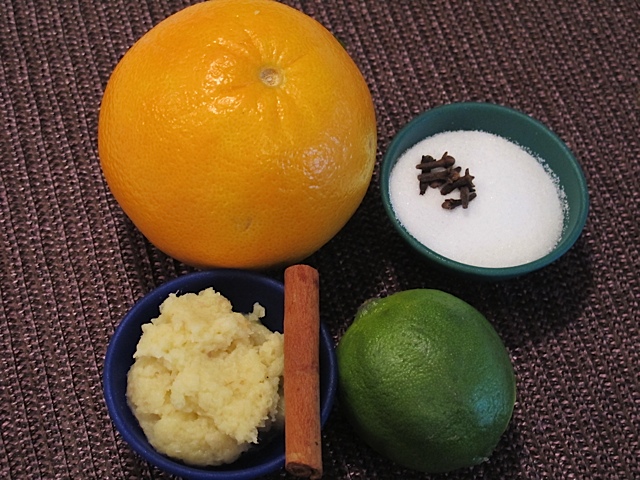
Ginger Brew Ingredients
Yield: 2 cups of concentrate which makes about 8 glasses of tea or cold brew
Ingredients:
• 1 cup boiling water
• 3 Tbsp fresh grated ginger (I don’t peel it)
• 3 Tbsp granulated sugar
• 7 whole cloves
• 1 cinnamon stick (2 ½ inches long)
• 1 lime, squeezed (use the juice only)
• ½ juice orange, squeezed (use the juice only)
• 1 cup cold water
Instructions:
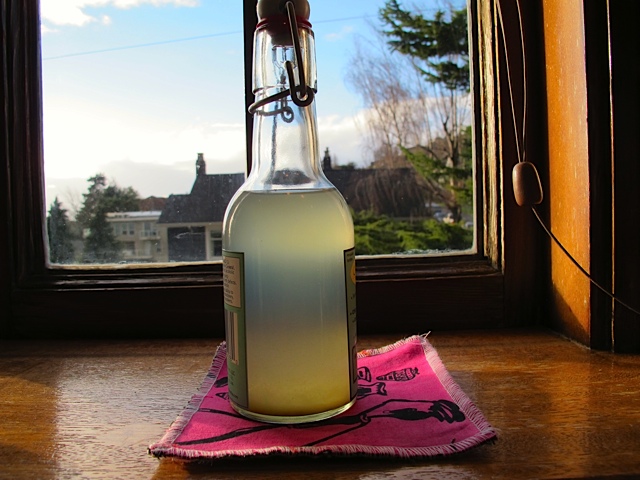
Pour boiling water over the grated ginger, sugar, cloves and cinnamon Stir, cover and keep in a glass bowl or measuring cup and place in a warm place covered for an hour. If it is sunny, put it on the window sill. This time of year I keep it in a warm oven (90 degrees).
After the hour, strain the liquid through a fine sieve or cheesecloth. Add the lime juice, orange juice and cold water. Again, keep the mix in a glass container and cover it, then keep it in a warm place for another hour. Strain the liquid and don’t pour the sediment at the bottom of the container through the strainer-discard it. The mix should be pretty clear.
Store covered in the refrigerator. This will keep for 7-10 days. Freeze for longer storage.
 |
A large glass of water w/ Herbal Resistance Formula
aides in de-stressing AND boosts your immune system! |
Acupuncture is well known for its potential ability to lower stress. Many people use acupuncture for stress reduction. And in my experience, even those who don't admit to or notice stress in their lives commonly report a greater sense of lightness and evenness to their moods after having acupuncture.
During the holiday season, many of us would benefit from the stress-reduction benefits of acupuncture. Too often though, we find it impossible to take the time for ourselves.
If you can swing going for acupuncture this time of year, all the better -- regular acupuncture treatments are, in my opinion, the best way to stay healthy and mentally balanced during high-stress times. But if you, like many people, are on a tighter schedule and budget for the coming month, we've got the next-best thing.
I asked acupuncturists and colleagues to share one piece of acupuncture-inspired advice for reducing holiday stress. I've simplified their suggestions for self-care tips that can be applied anytime, anywhere, and for next to nothing. This week and next week, we will share these ideas - and will offer related discounts both in clinic and as posted exclusively for fans on Facebook.
Appreciate Water
In acupuncture, each season has an associated natural element. Winter's is water. As the holidays cue our wintery instincts, we can use water literally and metaphorically as a natural holiday de-stressor.
I recommend starting every day with a large glass of lukewarm water. Fill your favorite glass with water and drink it slowly (even better if you add a few drops of Herbal Resistance Liquid), followed by taking some deep breaths into your abdomen. This morning ritual helps keep your body hydrated and relaxed at a time when more-than-usual amounts of alcohol and caffeine (both dehydrators) meet higher-than-usual stress levels.
Metaphorically, water serves as a model for coping with holiday stress. When stress starts to mount, close your eyes and imagine yourself as strong, yet fluid and flexible. You are easily able to adjust around whatever gets in your way. To truly live this experience, fill your tub with hot water and some bath salts. A variety of salts, including epsom - as well as essential oils - is an incredible treat.
For more information about Herbal Resistance or our special formulated bath soak 'Relax', contact us directly or find discounts for Facebook fans here.
 Do you have a hard time catching the zzzzz’s you need? Six to eight hours of quality sleep every night is necessary for your immune system, digestion, energy, and mental health. It’s vital to recharge your body so you can conquer the day ahead! Here are some nutritional tips to help you settle down for the night:
Keep your caffeine to a minimum, and only in the morning.
Every body breaks down caffeine differently, but its effects always last longer than the initial buzz you feel. It can take anywhere from 5-11 hours for your body to metabolize caffeine completely. Limit your caffeine to less than 150mg per day (about one 8 oz coffee), and stick to drinking it in the morning. For the caffeine content of different beverages, check out this page from the Mayo Clinic.
No meals or snacks within 2 hours of bedtime.
While your body does require some restful time for digesting, the whole process does require quite a bit of energy. It can be hard to get to sleep when your digestive organs are still hard at work! Additionally, meals close to bedtime can result in weight gain and heartburn.
Make sure you’ve got magnesium in your diet.
Magnesium is necessary for relaxation in a number of different ways. Good sources of magnesium include seeds (like sunflower or flax) and dark leafy greens. If you find your digestion is irregular in addition to being wound up at bedtime, a magnesium supplement may be an excellent option to get things moving. At Health On Point we carry a product that patients and practitioners alike swear by. Stop in for a free sample!
Calm down with some herbal tea.
Our Super Sleep herbal tea is compounded to help your body prepare for sleep. Take a few minutes away from the computer, television, or other distractions to clear your mind and help you settle down.
This week's article courtesy of Daily Dose Wellness.
Forget what you've been told. Acupuncture DOES have side effects. The unintended consequences of acupuncture, while not life-threatening, should not be overlooked. Side effects of acupuncture occur frequently and can seriously impact on your quality of life - for the better.
Here are the five most common side effects of acupuncture. (Consider yourself warned!)
Improved sleep
Insomnia is one of the most common complaints seen by acupuncturists, and acupuncture can be highly effective at resolving it. But even in people who do not recognize or mention sleep as a problem, acupuncture has a tendency to produce more restful nights. This often goes unnoticed until asked about on a follow-up visit. Many acupuncturists hear this refrain multiple times a day: "You know, now that you mention it, I have been sleeping a lot better since I started coming for acupuncture."
 More energy More energy
Although it's common to find yourself in "acu land" -- a somewhat dazed, blissfully-relaxed state -- immediately following acupuncture treatment, the after effect is usually increased energy. Many people report having more energy in the hours, days and even weeks after acupuncture treatment. You may notice that you're avoiding that post-lunch coma, feeling more motivated to hit the gym, or just sensing a little extra spring in your step.
Mental clarity
Acupuncture can help resolve the stagnation that causes many of us to feel physically and mentally lethargic. In addition to the surge of physical energy that follows emerging from acu land, many people notice improved mental clarity. They're able to make decisions faster, with greater confidence. They feel more motivated and resolute about tackling items that have been lingering for months on their to-do lists. It's as if the mental cobwebs have been cleared out. Suddenly, you're able to get out of your own way.
Better digestion
Digestion is big in acupuncture. The organ systems and meridians that regulate digestion are intimately connected to all other structures and functions throughout the body, so a person's digestive health says a lot about his or her overall state of health. This is why acupuncturists ask such detailed questions about eating habits and bowel movements. It's also why getting acupuncture for shoulder pain, for example, might cause you to use the bathroom more regularly, feel less bloated after meals, and experience fewer food cravings.
Less stress
Stress reduction is a common reason for seeking acupuncture. However, not everyone admits or even feels that they have stress in their life. They've gotten so used to living with a certain level of stress that it has become their "normal." It's only in the absence of stress that they notice how stressed out they were to begin with. Acupuncture heightens our awareness such that stressful events, initially, can actually be felt more acutely. But over time, by evening out our moods, acupuncture allows us to feel less affected by and better equipped to manage the stressful aspects of our lives.
So there you have it. The truth, once and for all: Acupuncture has side effects that may significantly influence your quality of life. If you are new to acupuncture, or are in the mood for a tune up, these are five great reasons to schedule your next visit at Health On Point!
At the end of last week, Reuters reported on a study in Hong Kong that concludes: Boosting the effect of acupuncture needles with small electric currents may be effective in treating depression.
Led by Zhang Zhang-jin at the School of Chinese Medicine, University of Hong Kong, the researchers used electroacupuncture to stimulate seven spots on the heads of 73 participants, who had suffered several bouts of depression in the last 7 years.
The electroacupuncture was given in addition to medication that the patients were already taking and meant to augment their treatment, Zhang told a news conference. Half the patients received electroacupuncture nine times over three weeks, while the other half - the placebo group - only had needles inserted superficially into their heads. They were later assessed by experts for their depression levels and the group that received genuine electroacupuncture was found to be a lot happier.
"The drop (in depression scores) among the group receiving active treatment was more significant than the placebo group," said Roger Ng, another researcher in the group, which published their findings in the journal PLoS (Public Library of Science) ONE. "When the acupoints are stimulated, some brain centres responsible for producing serotonin are stimulated," explained Ng, a consultant at the department of psychiatry at the Kowloon Hospital in Hong Kong.
An imbalance in serotonin levels is believed to be linked to depression. Depression affects about 20 percent of people at some point in their lives. The World Health Organization predicts that by 2020, depression will rival heart disease as the health disorder with the highest disease burden in the world.
At Health On Point, we are happy to work with you to help manage depression, stress or anxiety. We look forward to reviewing your complete health history to determine the best acupuncture acupuncture treatment or herbal support.
SOUTHWEST ASIA -- Stress is something that can affect anyone at anytime. Two members of the 386th Expeditionary Medical Group visited the 332nd Air Expeditionary Wing to give an idea of one way to manage stress: acupuncture. "Acupuncture, in Western medicine, is considered an alternative or complimentary medicine," said Col. Christian Hanley, a 386th Expeditionary Medical Group medical acupuncturist. "Acupuncture uses a single or series of needles to stimulate points along energy flow channels or meridians." Hanely explained that the needles can be used with or without stimulation. The stimulation can be in the form of manipulation, electrical stimulation, heat or cold. Hanley placed acupuncture needles in the hands, feet and scalp of all the attendees of the class. Acupuncture can treat both acute and chronic pain, obesity through appetite suppression, tobacco addiction, anxiety disorders, hormonal disorders such as menopausal symptoms, allergy and sinus problems, rashes and can promote overall well-being, Hanley said. "There are multiple types of acupuncture," Hanley said. "In addition to the meridian system that most people think of with points all over the body, there is also Chinese scalp acupuncture were needles are threaded just under the surface of the scalp to stimulate regions or stripes to effect pain, motor function, hearing, vision, balance and any number of issues. "The Koreans have developed a hand acupuncture system and there are a few variations of ear acupuncture," continued Hanley. "Acupuncture points can also be stimulated with beads that are held in place with adhesive strips similar to tape or Band-Aids and with lasers." Afterward, Master Sgt. Yvette Arce, from the 386th EMDG, talked about stress while members of the class felt the benefits of acupuncture. "When you start to feel stressed think of it on a scale of zero through 10," Arce said. "It all depends on what you make of it." Arce said some of the signs of stress include appetite changes, increased heart rate, tightness in the neck and shoulders and sweating. "Understand that you do have control under any circumstance to be able to deal with issues," Arce said. Each of the participants also left the class with something extra; a few semi-permanent needles in their ear that will fall out on their own within a week. "Ear acupuncture, or auriculotherapy, is useful for the same types of things that other systems of acupuncture are," Hanley said. "It can also be used for appetite suppression, tobacco cessation, pain, lung problems, kidney and liver disease, headaches, dizziness and almost anything you can think of."
Despite the advances of modern medicine, one in five patients has symptoms that are unexplained and untreated, contributing to stress for both the provider and individual. Further, studies have shown that the cost of managing the treatment of a patient with medically unexplained symptoms can be twice that of a patient with a diagnosis.
In an effort to provide a solution, a UK research team performed a clinical randomized controlled study on the efficacy of acupuncture for the undiagnosed disorders. Included in the research design was a linked interview of each patient’s subjective opinion of the intervention.
Some 80 patients from GP practices across London were selected to have five-element acupuncture added to their usual care. The results of the research are published in the British Journal of General Practice. The study group was made up of 80 adults, 80 percent female with an average age of 50 years and from a variety of ethnic backgrounds who had consulted their GP at least eight times in the past year. Nearly 60 percent reported musculoskeletal health problems, of which almost two-thirds had been present for a year. The patients were randomly divided into an acupuncture group and a control group. Eight acupuncturists administered individual five-element acupuncture to the acupuncture group immediately, up to 12 sessions over 26 weeks. The same numbers of treatments were made available to the control group after 26 weeks.
At 26 weeks the patients were asked to complete a number of questionnaires including the individualized health status questionnaire “Measure Yourself Medical Outcome Profile.” The acupuncture group registered a significantly improved overall score when compared with the control group. They also showed improved well-being but did not show any change in GP and other clinical visits or the number of medications they were taking. Between 26 and 52 weeks, the acupuncture group maintained their improvement and the control group, now receiving their acupuncture treatments, showed “catch up” improvement. Results from the associated qualitative study, which focused on the patients’ experiences, supported the quantitative work.
This tool identified that participating patients had a variety of longstanding symptoms and disability including chronic pain, fatigue and emotional problems which affected their ability to work, socialize and carry out everyday tasks.
Participating patients reported that their acupuncture consultations became increasingly valuable. They appreciated the amount of time they had with each acupuncturist and the interactive and holistic nature of the sessions – there was a sense that the practitioners were listening to their concerns and, via therapy, doing something positive about them.
This patient-centered orientation encouraged individuals to take an active role in their treatment, resulting in cognitive and behavioral lifestyle changes, such as a new self-awareness about what caused stress in their lives, and a subsequent ability to deal with stress more effectively; and taking their own initiatives based on advice from the acupuncturists about diet, exercise, relaxation and social activities.
Comments from participating patients included: “the energy is the main thing I have noticed. You know, yeah, it’s marvelous! Where I was going out and cutting my grass, now I’m going out and cutting my neighbor’s after because he’s elderly”; “I had to reduce my medication. That’s the big help actually, because medication was giving me more trouble…side effects”; and “It kind of boosts you, somehow or another.”
Dr. Charlotte Paterson, who managed the randomized control trial and the longitudinal study of patients’ experiences, commented: “Our research indicates that the addition of up to 12 five-element acupuncture consultations to the usual care experienced by the patients in the trial was feasible and acceptable and resulted in improved overall well-being that was sustained for up to a year.
“This is the first trial to investigate the effectiveness of acupuncture treatment to those with unexplained symptoms, and the next development will be to carry out a cost-effectiveness study with a longer follow-up period. While further studies are required, this particular study suggests that GPs may recommend a series of five-element acupuncture consultations to patients with unexplained symptoms as a safe and potentially effective intervention.”
She added: “Such intervention could not only result in potential resource savings for the (National Health Service), but would also improve the quality of life for a group of patients for whom traditional biomedicine has little in the way of effective diagnosis and treatment.”
In an interesting article last week, Tara Parker-Pope (a NYTimes blogger) writes about stress and infertility. In particular she explores the role that stress reduction may play in improving a couple's ability to conceive.
“It’s not that it’s all in your mind,’’ Dr. Domar said. “If you’re really stressed out and depressed, the body seems to sense that’s not a good time to get pregnant. There’s something about practicing relaxation techniques or being with other women who understand what you’re going through, probably a combination of everything, that makes a difference. It isn’t just about relaxing.”
At Health On Point Acupuncture, we strive to treat the whole individual. Treatments supporting one's reproductive health not only underlying Western Medical diagnosis, but the individual well - this includes mental and emotional well-being. If you would like a consult with me, or to learn more about what our clinic offers, please contact us.
Read the full article here.
|
|
|
|