|
Many of us struggle to maintain physical strength during the long cold winter months. Acupuncture in conjunction with exercise protects not only your heart, but builds endurance too! If you feel ready to be a healthier, stronger you, call Rachel to schedule your acupuncture sessions!
New research demonstrates that acupuncture prevents fatigue and enhances athletic endurance. Scientists measured the effects of three acupuncture points on the swimming task ability and liver mitochondrial function of laboratory rats in a highly controlled investigation. The results revealed that the normal control group and model group had significantly shorter swimming exhaustion times than the acupuncture group, which demonstrated objective improvements in athletic endurance. The acupuncture group also demonstrated improvements in liver mitochondrial-respiratory function with a significantly lower oxygen consumption rate than the normal control and model groups. The acupuncture group also demonstrated significant improvements in the liver mitochondrial respiratory control rate (RCR) and the ratio of phosphorus to oxygen (P/O).
The researchers measured additional interesting findings. They compared acupuncture point prescriptions. Group 1 received electroacupuncture at CV4 (Guanyuan) and ST36 (Zusanli) plus manual acupuncture stimulation at GV20 (Baihui). Group 2 received electroacupuncture at CV3 (Zhongji) and SP9 (Yinlinquan) and manual acupuncture stimulation at Yintang (EX-HN3). Group 1 demonstrated significantly better scores than group 2 thereby demonstrating that the CV4, ST36, GV20 acupuncture point prescription has markedly greater anti-fatigue effects.
The investigators note that the treatment principle for the CV4, ST36, GV20 acupuncture point prescription is Shuanggu Yitong, “strengthening both the congenital foundation and the acquired constitution and regulating the yang-qi of the body.” The measurements were geared to quantify the anti-fatigue effects of the point prescription by measuring physical activity capabilities and liver functions in laboratory rats. The researchers concluded that, “Electroacupuncture of CV4 and ST36 plus manual acupuncture stimulation of GV20 can improve the anti-fatigue capability in aging rats with yang-deficiency, which may be related to its effects in reducing liver mitochondrial oxygen consumption and increasing liver mitochondrial RCR and ratio of P/O.”
Another study took a different tack to determine if acupuncture has beneficial effects on bodily strength and endurance. Researchers from the International Society for Autonomic Neuroscience discovered that acupuncture controls the heart rate and increases the strength of cardiac autonomic function. The research indicates that specific acupuncture points may help to prevent heart attacks (myocardial infarctions) and arrhythmias.
Researchers conducted a study of acupuncture points CV17 (Shanzhong) and CV16 (Zhongting). Needling acupoint CV17 decreased the heart rate and increased the power of the high-frequency component of the HRV (heart rate variability), an index of the body’s ability to maintain control of the heart beat rate and rhythm through vagus nerve activity. The researchers conclude that CV17 “causes the modulation of cardiac autonomic function.” CV16 did not change the HRV or demonstrate the same level of beneficial effects on the heart rate as CV17. CV17 is able to activate the autonomic nervous system to control the heart rate by increasing vagal activity. Depressed HRV after MI, a heart attack, reflects a decrease in vagal activity and leads to cardiac electrical instability. Since acupuncture at CV17 increases the cardiac vagal component of HRV, it is an important acupuncture point for patients recovering from MI.
References:
Wang, H., J. Liu, J. M. Liu, J. F. Lü, M. Y. Chen, and J. Z. Wang. "Effect of electroacupuncture stimulation of" Guanyuan"(CV 4), bilateral" Housanli"(ST 36), etc. on anti-fatigue ability and liver mitochondrial respiratory function in ageing rats with Yang-deficiency." Zhen ci yan jiu= Acupuncture research/[Zhongguo yi xue ke xue yuan Yi xue qing bao yan jiu suo bian ji] 38, no. 4 (2013): 259.
Kurono Y, Minagawa M, Ishigami T, Yamada A, Kakamu T, Hayano J. Auton Neurosci. Acupuncture to Danzhong but not to Zhongting increases the cardiac vagal component of heart rate variability. 2011 Apr 26;161(1-2):116-20. Epub 2011 Jan 7.
Acupuncture may provide relief for dental patients who reflexively gag during procedures like teeth impressions, according to Italian researchers.
Up to 20 percent of the U.S. population has severe anxiety at the dentist's office. People who cannot help their gag reflex may unintentionally deprive themselves of the best dental care, write Giuseppa Bilello and Antonella Fregapane, both from the University of Palermo in Sicily.
Acupuncture may be one strategy to solve that problem, the pair suggests.
"It is a small study," Dr. Palle Rosted told Reuters Health. "But it is a good start."
Rosted is a consultant acupuncturist with Weston Park Hospital in Sheffield, England. He was not involved with the current study.
The researchers recruited 20 people with a history of gag reflex in the dental chair to have upper and lower teeth impressions taken under normal circumstances and then immediately after acupuncture.
Participants ranged in age from 19 to 80. For the first round of upper teeth impressions, they reported an average gag reflex score of 7 on a 0-10 scale, with 10 representing the maximum nausea sensation.
During the second round, the researchers applied acupuncture needles about 30 seconds before taking impressions and left the needles in until the procedure ended. On average, gag reflex scores dropped to just 1.
The pattern was similar for gag reflex scores during lower teeth impressions done with and without acupuncture, according to findings published in the journal Acupuncture in Medicine.
The researchers point out that they can't be sure the improvements were due to the acupuncture needles themselves — in part because there was no comparison group that didn't get acupuncture. Another possibility is that gag reflex scores improved because participants were more used to the impressions the second time around.
Still, "It has certainly given us some more evidence that acupuncture may be effective," Rosted said.
The study's positive result "is something that we doctors definitely need exposure to and to keep in mind as a possible option," Dr. Preeti Nair told Reuters Health. "We rarely think of acupuncture, and usually use local anesthetics."
Nair was not part of the current research. She has studied gag reflex at the People's College of Dental Sciences & Research Centre in Bhopal, India.
One difference between a drug like local anesthesia and acupuncture could be side effects.
"We haven't gotten all of the details in our hand, but with acupuncture, the side effects could be less," Nair said. Much more research is needed on the subject, she added.
In order for a large, randomized controlled trial — the gold standard in medical research — to be done on this subject, dental offices and academic institutions may have to work together, said Chris Dickinson of King's College London Dental Institute at Guy's Hospital in England.
In England, the British Dental Acupuncture Society offers training for dentists in certain dental applications of acupuncture, said Dickinson, who was not involved in the new study.
"There are very few contraindications associated with acupuncture and dental operations that we've experienced," Dickinson told Reuters Health. "But we don't use the technique in patients with metal allergies, pregnant women and those with needle phobias."
Dickinson noted that other acupuncture points could have been used for gag control such as ear points and LI4, also known as the Hegu point.
Researchers in the current study placed needles in the PC6, EX 1 and CV24 acupuncture points on the face and wrist.
"The message to dentists is that it's a simple technique and easily learned," Dickinson said. "It's also cost-effective. Even though it does not work in every case there's very little lost by trying it."
In the U.S., acupuncture typically costs about $100 per session.
One of the positive aspects of acupuncture is that after an operation, a patient may choose to drive home, which is not possible with other treatments, such as general anesthesia, Rosted said
"The risk of causing harm with this treatment is nearly non-existent," he said.
SOURCE: bit.ly/1h3eEAt Acupuncture in Medicine, online November 5, 2013.
 Hello! My name is Virginia Dreier and I am a licensed massage therapist at Health on Point. I graduated from East-West School of Integrated Healing Arts this past summer in North Liberty specializing in Swedish and blended Swedish-Shiatsu style massage. Although I grew up in Iowa City, I left for 6 years during which I attended Oberlin College and travelled as an outdoor educator. As a teacher I learned many lessons: about compassion, empathy, patience, and care. I still work as a teacher at Willowwind School in the Montessori preschool-continuing to learn these lessons.
I chose massage therapy because I wanted to live a life of balance and peace. I wanted to be healthy and less worried. I wanted to improve my quality of life. I feel very grateful to walk a new path as a healer. I offer to each client the same desires for optimal health and well-being.
Massage therapy, the practice of using touch to heal, is an ancient healing art and is found throughout the world in many different forms. Swedish massage refers to the use of oil or lotion on the skin to provide smooth strokes, compression, and percussion focused on muscle relaxation and circulation. Swedish massage is perhaps the most commonly known form of massage in the US because of its use at spas for gentle relaxation. Shiatsu originates from Japan and uses the meridian energy system (used in Traditional Chinese Medicine and acupuncture) to guide and focus treatments. It is performed using point pressure on certain parts of the body on top of the clothes and also involves passive stretches. Traditionally performed on the floor, I use a blended style that uses the massage table instead, appropriate Swedish strokes, and promotes balance of the energy meridians. It is a very relaxing experience.
Massage can strengthen your immune system, lower blood pressure, reduce headaches, and improve your mood. Massage is finally being studied, accepted and promoted by health officials and is now commonly used as complementary and alternative medicine. It is increasingly being offered along with treatment for a wide array of medical problems such as anxiety, insomnia related to stress, migraines, sports injuries and of course muscular ‘knots’.
Massage is not simply a source of relaxation it is a powerful tool for treating dis-ease and promoting a life of healing and health. My clients choose me because I have a deeply caring, intuitive touch and confident presence that builds trust; allowing them to relax and start healing themselves immediately. Please check out my Facebook page for more information about me and my practice, Renew Massage, or if you have any questions at all please email me. I am very grateful for and look forward to becoming a part of the Health on Point community and working towards healing for us all.
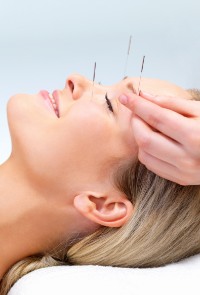
If you are interested in trying acupuncture for yourself, or want to give the gift of younger, healthier skin, contact Health On Point! Rachel trained in facial acupuncture with Virginia Doran in New York, and is using these techniques with patients here in Iowa City since 2007. You don't have to take our word for it...
As Lora Lipman entered her 60s, she began to notice not only fine lines around her eyes and lips, but an uneven skin tone she described as somewhat grayish and ashy.
She was reticent to opt for chemical enhancements, or the typically invasive nips, tucks, and pokes of plastic surgery.
So instead, on a recent afternoon, she lay perfectly still on a spa table as dozens of the tiniest of acupuncture needles were gently inserted into the skin of her face and head. It was her fourth week undergoing a cosmetic treatment at the steady hands of Stephanie Kula at the Jewish Community Center of the North Shore in Marblehead.
“Now,” said the 62-year-old from Beverly, “people say ‘Your skin looks so nice, so clear and healthy.”
Cosmetic acupuncture — new to the North Shore JCC but reportedly favored by the likes of Gwyneth Paltrow, Angelina Jolie, and Madonna — is on the growing list of natural alternatives to procedures such as face lifts and Botox and collagen injections.
It targets specific points on the face, with the tips of dozens of tiny needles — just as with other acupuncture procedures — placed beneath the skin to stimulate blood flow as well as the production of collagen and elastin. The goal, according to Kula, a licensed acupuncturist, is essentially to “overstimulate” certain areas.
The process can help to fade age spots, improve fine lines, diminish deeper wrinkles, even out and brighten skin tone, reduce jowls, rosacea, and acne, and reduce puffiness, Kula said.
She listed reducing pain, stress, symptoms of depression and anxiety, minimizing hot flashes and night sweats, and improving digestion and sleep cycles as some of the overall holistic benefits of acupuncture.
“It’s an internal and external process, and it works to relax your whole system,” said Kula, who studied the ancient practice at the Academy for Five Element Acupuncture in Gainesville, Fla., and owns the Salem-based North Shore Community Acupuncture. “It’s a way to really take care of yourself. Self-care is something we don’t really do that much of.”
While acknowledging that people can be put off by the very idea of becoming the equivalent of a human pincushion, she said it’s a relatively painless procedure because the needles are thin, less than an inch in length, and akin to a “cat whisker.”
“A lot of people come in with the fear of getting blood drawn,” she said, but having an acupuncture needle inserted is “a sensation you feel for a couple seconds, then it goes away.”
At the JCC in Marblehead, Kula offers what’s known as the Mei Zen method of cosmetic acupuncture, as developed by Denver-based practitioner Martha Lucas. The protocol involves placing 90-plus needles in various points in the face and head; Kula also has incorporated “cupping” into the process, which she says helps to speed up results through the use of suction cups placed and drawn across the skin on the face, neck, and chest to pull up the underlying muscles and tissue and increase blood flow.
She began offering the service at the JCC on Oct. 1. A full run of the procedure is five weeks — twice a week in 60- to 90-minute sessions — with follow-up maintenance once a month after that. Kula charges $150 per session throughout the five-week period, then $85 for follow-ups.
“This is a commitment you make to yourself,” said Lipman, who has been getting general acupuncture treatments for more than 30 years, and reports that they have helped her deal with reflux, sciatica issues, and a sprained ankle. And when the treatment is over, she feels “very relaxed,” she said. “My mind seems clearer. If I have any stress, it’s gone.”
On a recent afternoon, her session began as she lay down on a spa table in a private room, pillows beneath her head and calves. Her long hair was pulled back with a headband, jeans rolled up above the knees.
Kula asked how Lipman was feeling; then, after swabbing each area with antiseptic, she stuck various-sized needles into the tops of Lipman’s feet, around her ankles, below her knees, in her hands, and at her wrists.
Then, she placed a half-dozen smaller needles into the top of her head, and, finally, moved to her face, inserting numerous miniature needles above her eyebrows, on the sides of her nose, around and behind her ears, and tracing her cheekbones, lining her lips, and crowning her chin.
“I feel totally relaxed,” Lipman said as Kula softly pricked her skin. “I really don’t feel most of them. With some, it’s just a little bit of pressure — hardly at all.”
Roughly a half-hour later, Kula carefully removed the tiny implements — Lipman’s skin tinged pink in some areas where they had been applied — then proceeded to place cups on her neckline and face.
“I feel great, wonderful. It’s like having a minivacation,” Lipman reported when it was over.
Hello, My name is Mario Corella and I am a Reiki practitioner at Health On Point. I provide several services to clients including singing bowl therapy, reiki, and chakra balancing. There are numerous benefits from these therapies. Holistic medicine is becoming more and more popular. Funding and research in alternative therapies helps to enhance knowledge of these types of healing.

Reiki is a subtle therapy used to promote overall well being. Reiki involves a practitioner holding their hands over various areas of a patient’s body to correct energy imbalances. It is practiced in over 800 hospitals in the United States. Relaxation and stress reduction are two of the major benefits of Reiki. This type of healing can be beneficial for anyone. People who suffer from chronic pain, stress, depression, cancer, migraines, insomnia and pre and post surgical patients are a few examples of those who benefit. One session is enough to feel benefits and notice a change in condition. Multiple sessions help to perpetuate feelings of general well being. After a session, patients typically feel relaxation and a sense of calm and peace.

Singing Bowl sessions are another type of therapy that assist in relaxation and the promotion of well being. I use a set of 7 crystal quartz singing bowls. Each bowl is specially tuned to affect a different area of the body and produce a unique sound frequency. The vibrations of the singing bowls are intended to permeate the cells of the body and facilitate healing and balancing of the body’s energy. The sounds produced are quite distinct, especially when multiple bowls are played, enhancing the depth of sound. This therapy can be used for meditation and allows the listener to enter a state of great relaxation.
A new pilot study finds acupuncture effective in significantly improving eyesight for patients with retinitis pigmentosa (RP). This disorder is a genetically inherited condition that may lead to blindness. Acupuncture improved overall eyesight and improved issues of dark to light adaptation and nyctalopia (night blindness).
Patients received 10 thirty minute acupuncture treatments over a two week period. Acupuncture styles included electroacupuncture, local acupuncture and body-style acupuncture. Local points included acupuncture needles on the forehead and below the eyes.
Testing showed that some of the subjects improved in both eyes after only one week of acupuncture treatment and the results lasted between 10 to 12 months. Dark adaptation increased significantly in the subjects. Night vision and the ability to see in darkened regions improved significantly in subjects. Several other visual field improvements were noted in the subjects including expansion of visibility within are larger visual field. The researchers concluded that acupuncture “entails minimal risk if administered by a well-trained acupuncturist and may have significant, measurable benefits on residual visual function in patients with retinitis pigmentosa, in particular scotopic sensitivity, which had not previously been studied.”
This recent study was published in the prestigious Clinical and Experimental Optometry journal. Treatments for retinitis pigmentosa with acupuncture and herbal medicine have demonstrated positive clinical outcomes in several studies. A groundbreaking study was published in 2011 wherein it was discovered that acupuncture protects the optic nerve from damage caused by intraocular pressure by alleviating stresses on retinal and optic nerve axonal ultrastructures. Another study showed that Chinese medicine improved retinal cone activity for patients with retinitis pigmentosa, even in cases of advanced retinal degeneration. Using electroretinograms for the investigation, the study also concludes that, “TCM (Traditional Chinese Medicine) treatment could also enhance the bioactivity of (the) nerve network and therefore have a definite significance in retarding the progression of disease and keeping the central vision.
A more aggressive study wherein She Xiang was injected into acupuncture points UB18 and UB23 found that acupuncture improved eyesight for patients with retinitis pigmentosa. The study concludes that injection of She Xiang into Ganshu (UB18) and Shenshu (UB23) “can improve effectively the function and metabolism of optic cells, promote blood circulation of the retina, enhance the visual acuity, and protect the central vision for the patient of retinitis pigmentosa.” In yet another study of retinitis pigmentosa, patients receiving acupuncture (ranging from ages 7 – 75 years) showed significant improvement and a halting of deterioration of the visual field.
|
|
|
|