|
Today starts China's Lunar New Year. The year of the Dragon is here - the water dragon, to be exact - a fierce, mystical and wonderful creature.
The Chinese use a lunisolar calendar, depending on the sun and moon cycles to determine years. Spanning back to the Shang Dynasty in the 14th century, the calendar has been a mainstay in Chinese culture for centuries. Because the dragon is a special zodiac, many expect this year's Chinese New Year celebrations around the world to be among the most illustrious in history.
The Chinese New Year was originally a celebration of Heaven and the Earth, and later evolved into a celebration and remembrance of ancestors and their sacrifices. The celebration of Chinese New Year’s begins on the first new moon of the month and ends 15 days later with a Lantern Festival. To start off the New Year, there is a feast called weilu, meaning ‘surrounding the stove.’ Both the ancestors and the living celebrate this together, as a community. The family ancestors are important because they determined the fortune of the family, thus they are remembered and worshipped. Traditional food made for the Chinese New Year’s Feast includes fish, chicken, and noodles. All may not be cut and instead are served whole to represent completeness and long life.
Every traditional household will have a blooming plant to symbolize rebirth for the New Year. It is very important for a person to have some type of flower as it is believed that without one, there is no fruit. Thus, it is very crucial to have flowers and plants for the New Year. Another common tradition is the giving of tangerines and oranges when visiting others during the celebration of Chinese New Year. Both fruits represent happiness for the following year. There is also a candy tray referred to as ‘The Tray of Togetherness’ in which specials candy that represent anything from happiness to good health. Wearing red is suggested to bring luck and happiness to the New Year.
We at Health On Point want to wish our patients - new and old - 恭禧發財 Gong Xi Fa Cai! (Happy Chinese New Year!). Please stop by the clinic - whether you have an appointment or not - between now and Lantern Festival to pick up your New Year's gift for happiness in the Year of the Dragon. Effective immediately, we are extending patient hours and appointments openings to Monday through Saturday. Call or email to schedule your next acupuncture, herbal, or wellness visit.
(Below is an excerpt from a recent article published in a Spanish newspaper.) You may be hoping to get pregnant, are pregnant, or know someone special who is pregnant. This is an extremely exciting period during which the body undergoes major changes, nurtures a precious life and prepares for a healthy delivery of a baby.
Research has shown that Acupuncture can be very beneficial during pregnancy and labor. According to the World Health Organization, Acupuncture is useful for nausea, vomiting and significantly reduces the duration of labor and labor pains. There is also strong evidence that Acupuncture helps with a breach birth.
The most common complaints pregnant women present to our clinic are: 
- Morning sickness
- Recurrent miscarriage
- Threatened miscarriage
- Heartburn
- Haemorrhoids
- Oedema (fluid retention)
- Sinus and mucosal congestion
- Hypertension
- Anxiety, depression
- Insomnia
- Musculoskeletal conditions
- Constipation
- Low back pain, sciatica, pubic symphysis pain etc.
ACUPUNCTURE DURING PREGNANCY During the first trimester, the focus of the treatment is to reduce the likelihood of miscarriage and address any early pregnancy symptoms such as nausea, morning sickness and fatigue. Acupuncture during the second semester aims to maintain the balance and address many of the common complaints of pregnancy mentioned above. Acupuncture during the third trimester prepares the body for labour and delivery by relaxing and softening ligaments, aiding cervical dilation, nourishing the body’s ‘’Qi’’ and blood, as well as relieving any muscular pain or discomfort. This is also the time where Acupuncture is used to turn breach babies. It is recommended to start this treatment as soon as you learn that the baby is in breach position (around 33-36 weeks) During the entire pregnancy, special attention is given at diet and lifestyle.
ACUPUNCTURE FOR LABOR INDUCTION Treatment for labour induction can be given any time after 38 weeks if there are no complications with the pregnancy.
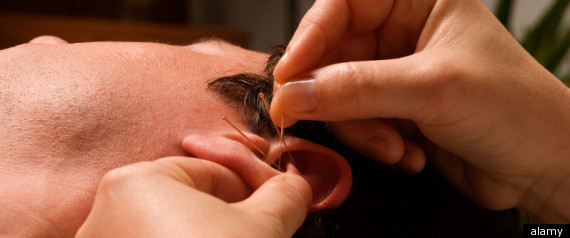
SOUTHWEST ASIA -- Stress is something that can affect anyone at anytime. Two members of the 386th Expeditionary Medical Group visited the 332nd Air Expeditionary Wing to give an idea of one way to manage stress: acupuncture. "Acupuncture, in Western medicine, is considered an alternative or complimentary medicine," said Col. Christian Hanley, a 386th Expeditionary Medical Group medical acupuncturist. "Acupuncture uses a single or series of needles to stimulate points along energy flow channels or meridians." Hanely explained that the needles can be used with or without stimulation. The stimulation can be in the form of manipulation, electrical stimulation, heat or cold. Hanley placed acupuncture needles in the hands, feet and scalp of all the attendees of the class. Acupuncture can treat both acute and chronic pain, obesity through appetite suppression, tobacco addiction, anxiety disorders, hormonal disorders such as menopausal symptoms, allergy and sinus problems, rashes and can promote overall well-being, Hanley said. "There are multiple types of acupuncture," Hanley said. "In addition to the meridian system that most people think of with points all over the body, there is also Chinese scalp acupuncture were needles are threaded just under the surface of the scalp to stimulate regions or stripes to effect pain, motor function, hearing, vision, balance and any number of issues. "The Koreans have developed a hand acupuncture system and there are a few variations of ear acupuncture," continued Hanley. "Acupuncture points can also be stimulated with beads that are held in place with adhesive strips similar to tape or Band-Aids and with lasers." Afterward, Master Sgt. Yvette Arce, from the 386th EMDG, talked about stress while members of the class felt the benefits of acupuncture. "When you start to feel stressed think of it on a scale of zero through 10," Arce said. "It all depends on what you make of it." Arce said some of the signs of stress include appetite changes, increased heart rate, tightness in the neck and shoulders and sweating. "Understand that you do have control under any circumstance to be able to deal with issues," Arce said. Each of the participants also left the class with something extra; a few semi-permanent needles in their ear that will fall out on their own within a week. "Ear acupuncture, or auriculotherapy, is useful for the same types of things that other systems of acupuncture are," Hanley said. "It can also be used for appetite suppression, tobacco cessation, pain, lung problems, kidney and liver disease, headaches, dizziness and almost anything you can think of."
With a special interest in helping patients diagnosed with cancer, Rachel is the only acupuncturist in Iowa to complete integrative oncology education with Memorial Sloan-Kettering Cancer Center in New York. Last week, Acupuncture in Medicine (published by British Medical Journal | Journals) reported the following article:
December 8, 2011 — Acupuncture may help relieve the severe pain associated with chemotherapy-induced peripheral neuropathy (CIPN), according to the results of a pilot study published in Acupuncture in Medicine.
The major groups of drugs that induce CIPN include the taxanes, vinca alkaloids, and platinum compounds, Sven Schroeder, MD, from the HanseMerkur Center for Traditional Chinese Medicine at the University Medical Center Hamburg-Eppendorf, Hamburg, Germany, told Medscape Medical News.
"CIPN involves damage to the peripheral nervous system and can produce severe pain and gait impairment, and is often a reason for stopping chemotherapy with these agents," Dr. Schroeder said.
Data from other studies published in English-language journals on acupuncture as a symptomatic treatment for CIPN have been limited to a few case studies, but they have all reported an improvement in symptoms. Additionally, a Chinese study found that acupuncture was more effective than cobamamide for the treatment of sensory symptoms in paclitaxel-induced CIPN, he said.
"These findings are of special significance since peripheral neuropathy is otherwise almost untreatable, but seems to respond to treatment by acupuncture," Dr. Schroeder said.
In the current study, he and his team evaluated the therapeutic effect of acupuncture on CIPN as measured by changes in nerve conduction studies. The study population consisted of 11 patients who had developed symptoms of peripheral neuropathy during chemotherapy for a variety of cancers.
The acupuncture was performed on all patients by the same physician who had received more than 1000 hours of acupuncture training before participating in the trial and who had used acupuncture for 20 years.
Clinical examination showed that all the patients had a mixture of numbness on touch and nerve pain, and nerve conduction studies showed evidence of damage to the sural nerve.
The study found that acupuncture improved both the speed and the intensity of the nerve signaling in 83% of patients. These same patients also reported that their condition had improved.
"It has been shown that acupuncture may increase the blood flow in the limbs," he said, explaining how acupuncture might work in this condition. "Increased blood flow to the vasa nervorum and dependent capillary beds supplying the neurons may contribute to nerve repair with measurable improvement of axons or myelin sheaths."
His research team is planning a randomized, controlled trial, first in patients with diabetic neuropathy and next among those with CIPN, he said.
A study recently published in the journal Pediatrics concludes that treating kids with acupuncture is a common practice and generally safe, according to a new study.
“Like adults, acupuncture is very safe when applied to the children’s population,” said Jamie Starkey, an acupuncturist from the Cleveland Clinic, who did not take part in the study. “And so it basically mimics exactly what is seen in the adult population.” Researchers at the University of Alberta studied data from different countries spanning 60 years. They looked at the association between needle acupuncture and the different adverse events in children. Out of 279 adverse effects, 253 were mild, according to the researchers. (The other 25 adverse effects were likely related to sub-standard techniques.)Adverse effects included bruising, bleeding and worsening of symptoms after treatment. “Any of the serious side effects that they found were definitely due in part to the clinician’s malpractice,” Starkey said. “So, it was certainly somebody who was not necessarily the most trained. The take-home message is that it is absolutely safe in both the adult and pediatric world, but you have to go to somebody who is trained.”
Our clinic offers treatments by one of the few Board Certified Acupuncturists in the Iowa City area Rachel received additional training in pediatrics that include numerous techniques beyond simply needling that is beneficial for this population. Youngsters have found relief at Health On Point for a variety of complaints including pain (chronic and acute), headaches, bedwetting, stress/anxiety and asthma.
We welcome any inquiries by phone, email, or in person!
Sent by a wonderful patient of mine!
An ancient therapy could prove effective at relieving a common side effect of cancer treatment, a new study shows.
According to Randomized controlled trial of acupuncture for prevention of radiation-induced xerostomia among patients with nasopharyngeal carcinoma, Acupuncture was able to reduce dry mouth in people who were receiving radiation therapy to treat their head and neck cancers, reported researchers from the University of Texas MD Anderson Cancer Center and the Fudan University Shanghai Cancer Center.
Dry mouth, also known as xerostomia, occurs when there is not enough saliva in the mouth.
"The medical implications are quite profound in terms of quality of life, because while chronic dry mouth may sound benign, it has a significant impact on sleeping, eating and speaking," study researcher Lorenzo Cohen, Ph.D., director of MD Anderson's Integrative Medicine Program, said in a statement. "Without saliva, there can be an increase in microbial growth, possible bone infection and irreversible nutritional deficits."
Researchers examined 86 people with nasopharyngeal carcinoma who were undergoing radiotherapy for their cancer. Forty of the patients received acupuncture three times a week while they received their radiotherapy over seven weeks, while 46 just had regular care.
Researchers monitored the study participants' saliva flow using a Xerostomia Questionnaire -- a score under 30 meant that dry mouth was mild or completely gone.
A month after all the study participants had finished their therapies, researchers found that 54.3 percent of the people who had acupuncture had a Xerostomia Questionnaire score of over 30, while 86.1 percent of people who didn't have acupuncture had a score of over 30.
And then six months after undergoing treatment, researchers found that just 24.1 percent of the people who had acupuncture had a score over 30, while 63.6 percent of the people who didn't had a score of over 30.
Researchers said more studies are needed to see why exactly acupuncture has these benefits.
In 2009, MD Anderson researchers had also found that acupuncture twice a week seemed to relieve dry mouth in cancer patients being treated with radiation therapy, ScienceDaily reported.
Previously, studies have shown that acupuncture can help relieve people experiencing chronic back pain. WebMD reported on a 2009 study showing that acupuncture was actually more effective than physical therapy and drugs at relieving this kind of pain.
If you or someone you love would benefit from these treatments, please contact us. Rachel is the only acupuncturist in Iowa with oncology training from Memorial Sloan-Kettering Cancer Center in New York.
|
|
|
|